

Major ship naming announcements consolidate the Navy’s fleet expansion strategy
Aircraft Carriers Honor Former Presidents
Secretary of the Navy Carlos Del Toro announced the names of two future Gerald R. Ford-class aircraft carriers: USS William J. Clinton (CVN 82) and USS George W. Bush (CVN 83). This marked the first Navy vessels named for either president.
The future USS William J. Clinton honors President William J. Clinton, the 42nd President of the United States, who served two terms from 1993 to 2001. The future USS George W. Bush honors President George W. Bush, the 43rd President, who served from 2001 to 2009. According to the Navy Press Release, the names follow the Navy tradition of naming aircraft carriers after U.S. presidents.
“President Clinton and President Bush led the United States through some of the most challenging moments in U.S. history,” said Secretary Del Toro. “Their legacies will endure through these aircraft carriers, which serve as formidable platforms dedicated to safeguarding our national security and strengthening our resolve to protect this nation against any who would threaten our freedoms and way of life.”
During a private ceremony at the White House on January 3, 2025, Ms. Chelsea Clinton, daughter of President Clinton, was announced as the sponsor for USS William J. Clinton (CVN 82), representing a lifelong relationship with the ship and crew.
President Clinton’s Military and Diplomatic Legacy
As Commander-in-Chief, Clinton was responsible for multiple military operations that achieved success with no combat casualties, including Operation Uphold Democracy (1994), Operation Deliberate Force (1995), and Operation Allied Force (1999). He directed U.S. Navy cruise missile strikes against Iraqi intelligence headquarters in 1993 and 1996 (Operation Desert Strike) in response to Iraqi aggression, followed by Operation Desert Fox in 1998—an air campaign to degrade Iraqi weapons of mass destruction capabilities. In 1996, Clinton directed the largest deployment of U.S. naval forces since the Vietnam War to deter Chinese aggression during the Third Taiwan Straits Crisis.
Diplomatically, Clinton played a pivotal role in the Oslo Accords, establishing a framework for peace between Israel and Palestinians, and was instrumental in the Good Friday Agreement of 1998, which ended the conflict in Northern Ireland. He declared Iran a “state sponsor of terrorism” and imposed substantial sanctions, temporarily halted North Korean nuclear weapon development through the “Agreed Framework,” established full diplomatic relations with Vietnam, and oversaw NATO’s first expansion since 1982 with the addition of Poland, Hungary, and the Czech Republic.
“It’s never far from my mind that the precious freedoms Americans enjoy are safeguarded by our armed forces, anchored by a strong, modern, and agile Navy. I’m honored that future servicemembers carrying on that proud tradition will serve on a carrier bearing my name,” President Clinton said.
President Bush’s Post-9/11 Leadership
President Bush rallied the nation in the immediate aftermath of the September 11, 2001, terrorist attacks and forged an international coalition of 25 NATO members and 17 partner nations to execute Operation Enduring Freedom, dismantling terrorist networks in Afghanistan. He spearheaded the largest U.S. government reorganization since 1947, creating the Department of Homeland Security by combining 22 federal agencies and establishing the Office of the Director of National Intelligence to integrate operations across 18 intelligence agencies. Bush also signed the USA Patriot Act, updated the Foreign Intelligence Surveillance Act, and directed the deployment of aggressive financial measures to freeze terrorists’ assets.
In 2003, he directed Operation Iraqi Freedom, which ended the dictatorship of Saddam Hussein and enabled Iraq’s first direct elections in over three decades. Bush supported further NATO expansion into Eastern Europe and the Baltic States while working with Russia to reduce nuclear weapons stockpiles. Recognizing evolving global threats, he directed the establishment of the U.S. Africa Command and advanced planning for U.S. Cyber Command. He also launched the President’s Emergency Plan for AIDS Relief (PEPFAR), a historic humanitarian initiative that saved millions of lives, and increased defense spending by more than a third to modernize the military.
“I am honored that my name will be associated with the United States Navy and a symbol of our Nation’s might,” said former President Bush. “I have a special admiration for the men and women of our Navy—including my dad—and ask God to watch over this ship and those who sail aboard her.”
The Gerald R. Ford-Class
The Gerald R. Ford-class is the replacement for Enterprise- and Nimitz-class aircraft carriers. The lead ship, USS Gerald R. Ford (CVN 78), was commissioned in 2017. Ford-class carriers and carrier strike groups provide core capabilities of forward presence, deterrence, sea control, power projection, maritime security, and humanitarian assistance while bringing improved warfighting capability, quality-of-life improvements for sailors, and reduced total ownership costs.
The Ford-class is designed to operate with almost 600 fewer crew members than a Nimitz-class ship. USS Gerald R. Ford was the first aircraft carrier designed with all-electric utilities, eliminating steam service lines and reducing maintenance requirements and corrosion control issues. The new A1B reactor, Electromagnetic Aircraft Launch System (EMALS), Advanced Arresting Gear (AAG), and Dual Band Radar (DBR) all offer enhanced capability with reduced manning. The class is designed to maximize sortie generation rate (SGR) of embarked strike aircraft, resulting in a 33 percent increase in SGR over the Nimitz-class. The ship’s configuration and electrical generating plant are designed to accommodate new systems, including directed energy weapons, during its 50-year service life.
Virginia-Class Submarine Named After San Francisco
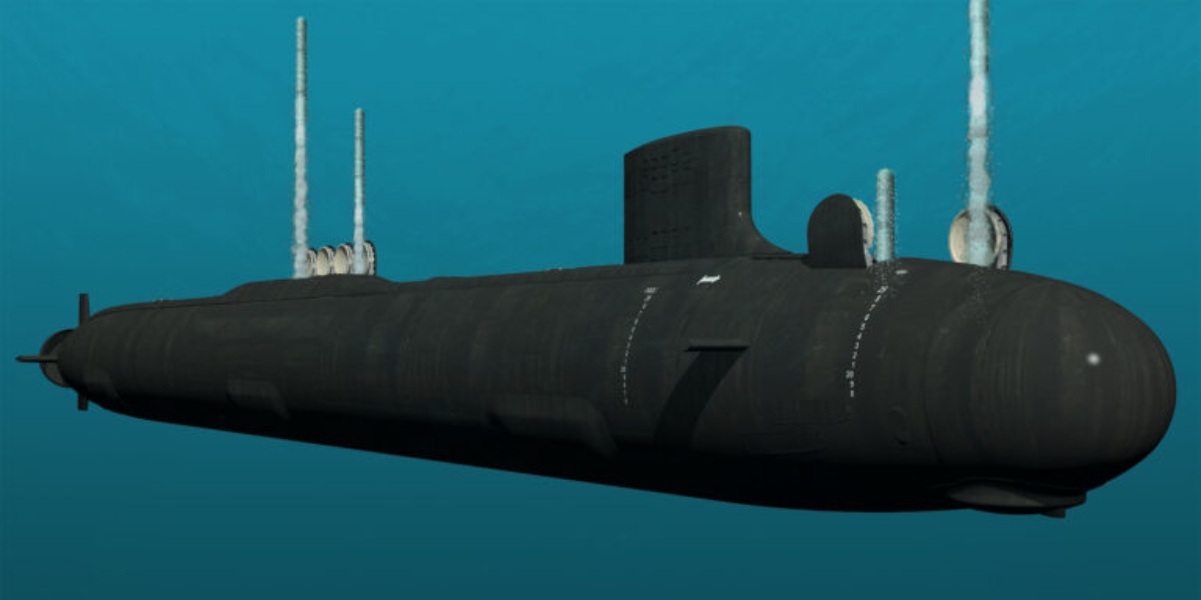
Secretary of the Navy Carlos Del Toro announced in early October that SSN-810, the ninth Block V Virginia-class nuclear attack submarine, would be named USS San Francisco. He made the announcement during Fleet Week events in San Francisco while speaking in the Embarcadero neighborhood on the city’s eastern shore.
“USS San Francisco will build upon the legacy of her namesakes and will no doubt represent the people of this city and our nation with honor wherever she may sail,” Del Toro said.
Former House Speaker Nancy Pelosi (D-Calif.) was announced as the submarine’s sponsor.
Virginia Payload Module Enhancement
As a Block V ship, SSN-810 will be outfitted with the Virginia Payload Module (VPM), a feature introduced with the second Block V ship, SSN-803, currently under construction. VPM incorporates four additional large-diameter payload tubes in a new hull section located amidships. Each VPM payload tube is capable of carrying seven Tomahawk cruise missiles, adding 28 missiles per VPM. VPM reconstitutes the ability to host dry deck shelters, further enhancing special operations forces (SOF) capability, and allows the Navy to host additional advanced payloads via multiple ocean interfaces. Block V hulls include ten ships procured from 2019 through 2023 (SSNs 802-811).
San Francisco’s Naval Legacy
SSN-810 is the fourth ship named after the city. The first USS San Francisco, a steel-protected cruiser, blockaded Havana during the Spanish-American War and served as a mine planter in the North Sea during World War I. The second San Francisco, a heavy cruiser, participated in operations and engagements at Cape Esperance, Guadalcanal, Guam, the Marshall Islands, and Okinawa during World War II.
The most recent predecessor was the Los Angeles-class attack submarine USS San Francisco (SSN-711), which was inactivated from service in 2017. During its service life, the attack boat collided with an underwater mountain in 2005, leading to an extensive refit. The hull is now the moored training vessel for the Naval Nuclear Power Training Unit in Charleston, South Carolina.
The naming of SSN-810 followed Del Toro’s announcement in May at New York Fleet Week that Block V Virginia attack boat SSN-811 would be named USS Long Island.
Virginia-Class Capabilities
The Virginia (SSN 774)-class is the next-generation attack submarine, designed to replace Los Angeles-class submarines as they retire. Twenty-one Virginias have been commissioned to date. The class features special innovations that significantly enhance warfighting capabilities, including littoral—or coastal—operations.
Virginia-class submarines include special features to support SOF operations, featuring a reconfigurable torpedo room that can accommodate a large number of SOF personnel and equipment for prolonged deployments, as well as future off-board payloads, and a large lockout truck (LOT) for divers. Traditional periscopes have been supplanted by two photonics masts that host visible and infrared digital cameras atop telescoping arms. The removal of barrel periscopes allowed the ship’s control room to move down one deck and away from the hull’s curvature, affording it more room and an improved layout for enhanced situational awareness for the commanding officer.
Through extensive use of modular construction, open architecture, and commercial off-the-shelf components, the Virginia-class is designed to remain state-of-the-art throughout its operational life by rapidly introducing new systems and payloads.
Photo by U.S. Navy

