

How Navy Pilot Mark Vizcarra Trained for the “Impossible” and Saved His Tomcat in 1992
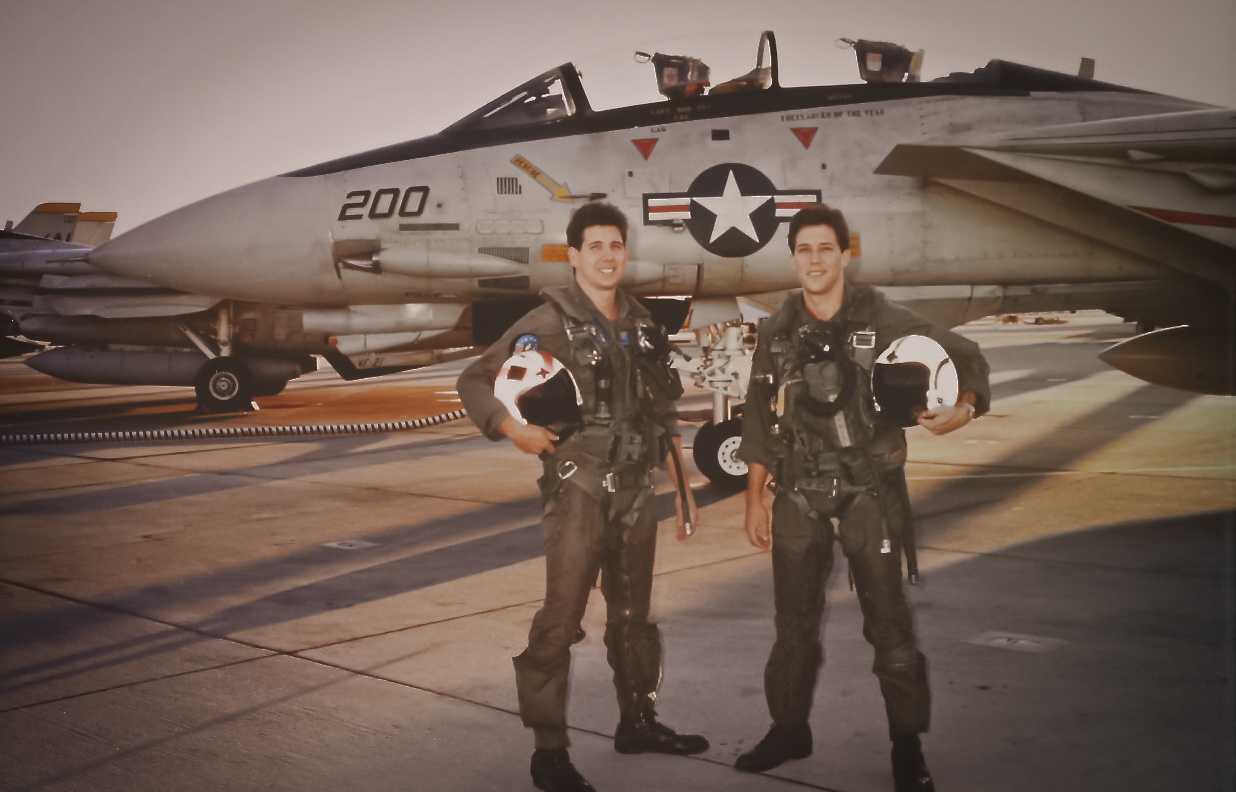
It was 1992 over Arkansas, and Mark Vizcarra‘s F-14 Tomcat was supposed to be simulating a Soviet SU-27 in aerial combat against F-15 Eagles. Cruising near Mach 1 due to the high-speed engagement, the Tomcat’s variable swept wings had automatically swept back to their near-maximum position—exactly where they were designed to be for supersonic performance. Then the wings stopped responding. No automatic adjustment. No manual control response. In combat, spread 180 degrees from his Eagles opponents, Vizcarra pulled into the vertical while his Radar Intercept Officer, Rick “Rico” Jordan, scanned the wing status. The buffeting that normally disappeared as the wings found their optimal angle never subsided. When Vizcarra glanced back, the wings hadn’t moved a millimeter. He called “Knock it Off” and began the most unconventional emergency recovery in Navy tactical aviation: flying a “flying dart” back to Naval Air Station Dallas with wings frozen in full-aft position, no flaps, no spoilers, and an approach speed that would exceed runway arrest-gear limits.
Context
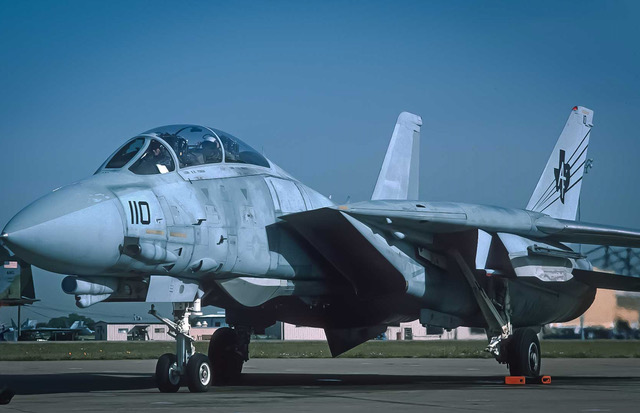
The F-14 Tomcat represented a revolutionary engineering solution to carrier aviation’s most pressing problem: how to achieve both high-speed combat performance and low-speed carrier landing capability. The variable swept-wing system was the answer—wings swept back for supersonic speed, swept forward for low-speed control and landing. But this mechanical complexity introduced a catastrophic failure mode that Navy instructors insisted had never occurred in the aircraft’s operational history.
The 1992 Emergency: How a Pilot Trained for the “Impossible”
Vizcarra’s journey from speculation to survival began years earlier. During initial Tomcat training, he had studied the aircraft’s technical manuals obsessively and discovered a glaring omission: there were no documented recovery procedures for a variable-swept wing failure. Every instructor he asked gave him the same answer—it has never happened, so don’t worry about it. But Vizcarra was the type of naval aviator who prepared for scenarios others dismissed.
At every opportunity during simulator training, Vizcarra manually locked the Tomcat’s wings in full-aft position and practiced emergency approaches. He developed his own unofficial procedures, ran different scenarios, and committed them to memory. Four years later, his intuition saved not only his life but the aircraft itself.
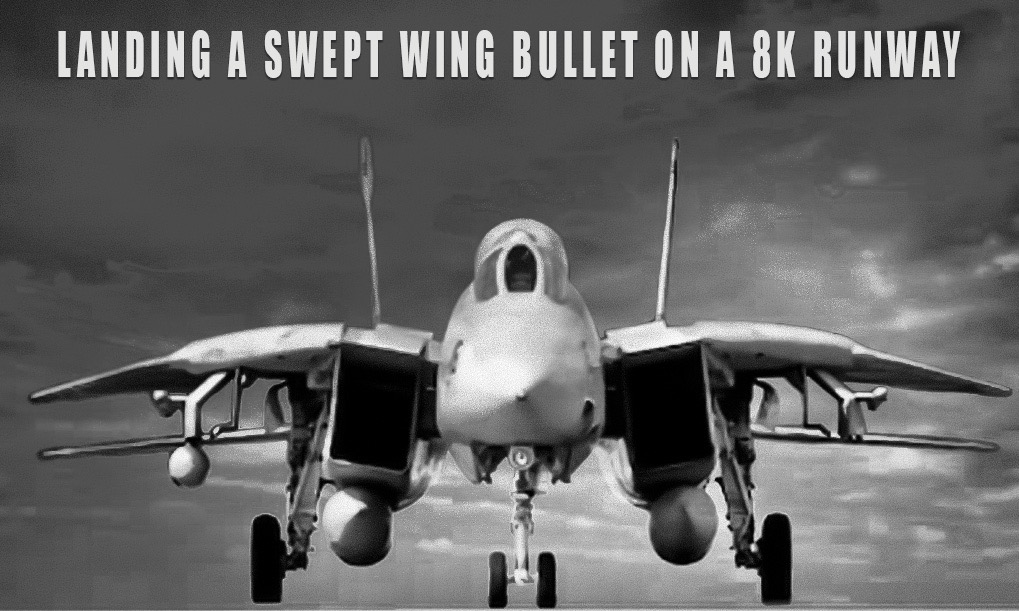
The engagement had been routine until the hydraulic failure. As he fought to regain manual control of the wings at 200 knots approach speed, the reality became clear: this aircraft was now a “flying dart” with no conventional means of speed control. Normal F-14 approach speed was 135 knots; he’d be coming in at 200 knots minimum to avoid stalling. The naval air station runway was 8,000 feet. The arrest-gear maximum speed was 178 knots. He was going to exceed that limit by at least 22 knots—a significant overage that could snap the arresting cable or tear off the landing gear.
The Plan and the Landing
As Vizcarra and Rico discussed options on the flight back to Dallas, Rico suggested diverting to nearby Carswell Air Force Base, which had a 12,000-foot runway—almost 50 percent longer. Vizcarra refused. He had a better idea: touchdown at the very beginning of the 8,000-foot runway, use the full length before reaching the arresting gear, then take a trap at the maximum allowable speed. It was aggressive, but those hundreds of simulator hours had given him confidence.
The crew dumped fuel to reduce aircraft weight and lower approach speed as much as possible. Before the final approach, the Commanding Officer radioed that emergency vehicles were in position and Landing Signal Officers (LSOs) were standing ready. Vizcarra called “the ball”—visual alignment with the runway—and executed an approach so precise that his hook caught the arresting cable at nearly the maximum allowable speed, pulling almost every inch of cable down the 8,000-foot runway.
The aircraft stopped safely. The post-flight inspection revealed the failure: a cracked titanium gear in the wing-sweep actuating system. It was a manufacturing defect that had been waiting to emerge under high-G combat stress. The incident spawned new inspection protocols for F-14 wing-sweep components, ensuring that what Navy instructors called “impossible” became preventable.
Variable-Swept Wing Design: Why This Failure Mattered
The F-14’s swing-wing design was revolutionary but complex. The wings swept automatically based on airspeed: forward at low speeds for carrier approaches (improving lift and control), swept back at high speeds (reducing drag and improving supersonic performance). This system required hydraulic actuators, mechanical linkages, and redundant manual override controls. The titanium gear that failed in Vizcarra’s aircraft was critical to this system’s operation. A hairline crack that might have gone undetected in peacetime training became catastrophic during a high-G engagement, rendering the entire sweep mechanism inoperable.
This incident became a teaching point: even “impossible” scenarios in military aviation require contingency procedures. Vizcarra’s willingness to train for a scenario instructors said would never happen proved the value of proactive aviator decision-making in high-stakes environments.
FAQ: F-14 Emergency Landing and Swept-Wing Operations
What exactly was the emergency in Vizcarra’s landing?
A cracked titanium gear disabled the F-14’s variable swept-wing actuator system during combat maneuvering, leaving the wings locked in full-aft (swept-back) position. This configuration eliminated flaps and spoilers needed for normal carrier landing, forcing an approach 65 knots faster than standard, well above the arrest-gear speed limit of 178 knots.
How did training in the simulator prepare him for an “impossible” scenario?
Vizcarra proactively requested simulator sessions where he manually locked the wings in swept position and practiced emergency approaches. Navy instructors believed swept-wing failure had never occurred, so no official procedures existed. Vizcarra created his own, repeating them until the procedures became instinctive.
Why couldn’t the pilot switch to manual control of the wings?
The mechanical failure affected both the automatic system and the manual override. The cracked gear prevented any wing movement regardless of control method. Vizcarra tried manual control during the engagement but found no response—confirming the extent of the hydraulic system failure.
What changed in F-14 operations after this incident?
The Navy implemented enhanced inspection protocols for wing-sweep actuation components, particularly the titanium gears prone to stress-crack initiation. The incident also influenced future aviator training emphasis on preparing for “impossible” scenarios rather than assuming historical precedent guarantees future safety.
Modeler’s Corner
For aviation enthusiasts interested in building an F-14 Tomcat with swept-wing configuration:
Tamiya 1/48 F-14A Tomcat — Considered the gold standard for F-14 modeling at 1/48 scale. Includes detailed variable-sweep wing mechanism. Intermediate to advanced skill level. Highly recommended for accuracy and detail.
Academy 1/72 F-14 Tomcat (multiple variants) — Excellent detail-to-price ratio. Wing-sweep mechanism simplified but functional. Beginner-friendly. Best entry point for new modelers.
Further Reading
Tomcat: The Grumman F-14 Story — Robert F. Dorr and Jon Lake. Comprehensive technical and operational history with extensive pilot interviews and combat records.
Tomcat Tales: Stories of Navy F-14 Pilots and RIOs — Mark and Michael Vizcarra (documentary film; book companion available). First-hand accounts from F-14 crews, including extended narrative of the 1992 emergency landing.
Swingwings: The Story of the Grumman F-14 Tomcat — Robert S. Hopkins III. Technical deep-dive into the variable-sweep wing system development and operational challenges.
Photo by the US Navy and Mark and Michael Vizcarra
Other awesome F-14 stories are featured in the documentary Tomcat Tales, available to purchase here.


