

‘The fourth MiG of this flight made a firing pass and made a lucky hit through the top of our left wing, about 8 ft from the fuselage through the wing flap,’ Capt. H.R. Austin, RB-47 pilot
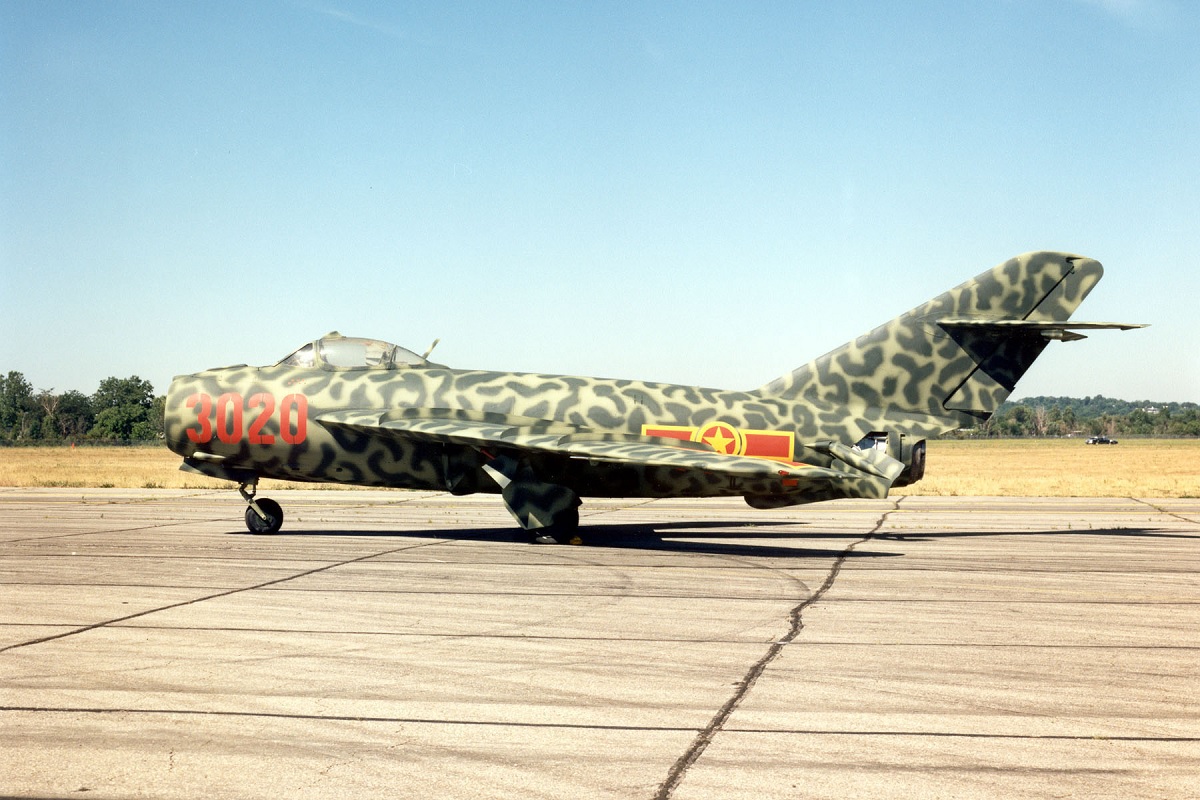
The Soviet MiG-17, known by the NATO reporting name “Fresco,” was developed as the successor to the well-known MiG-15 used during the Korean War. While it looked much like the MiG-15, the MiG-17 featured wings with a greater sweep angle, a longer fuselage, an afterburner, and improved speed and maneuverability. A prototype first flew in January 1950, and series production started in late 1951. Although the first operational MiG-17s entered service in 1952, they were not available in large enough numbers to see action in the Korean War. In time, five variants of the aircraft were built. The MiG-17 has been operated by the air forces of at least 20 countries around the world—including some allied with the United States—and it was used in combat against U.S. aircraft in Southeast Asia.
The North Vietnamese Air Force (VPAF) formed its first MiG-17 unit, the 921st Fighter Regiment, in February 1964 after its pilots completed training in communist China. The VPAF also operated Chinese-manufactured MiG-17s, known as J-5s. U.S. fighter pilots took care to capitalize on their significant speed advantage when engaging the more agile MiG-17.
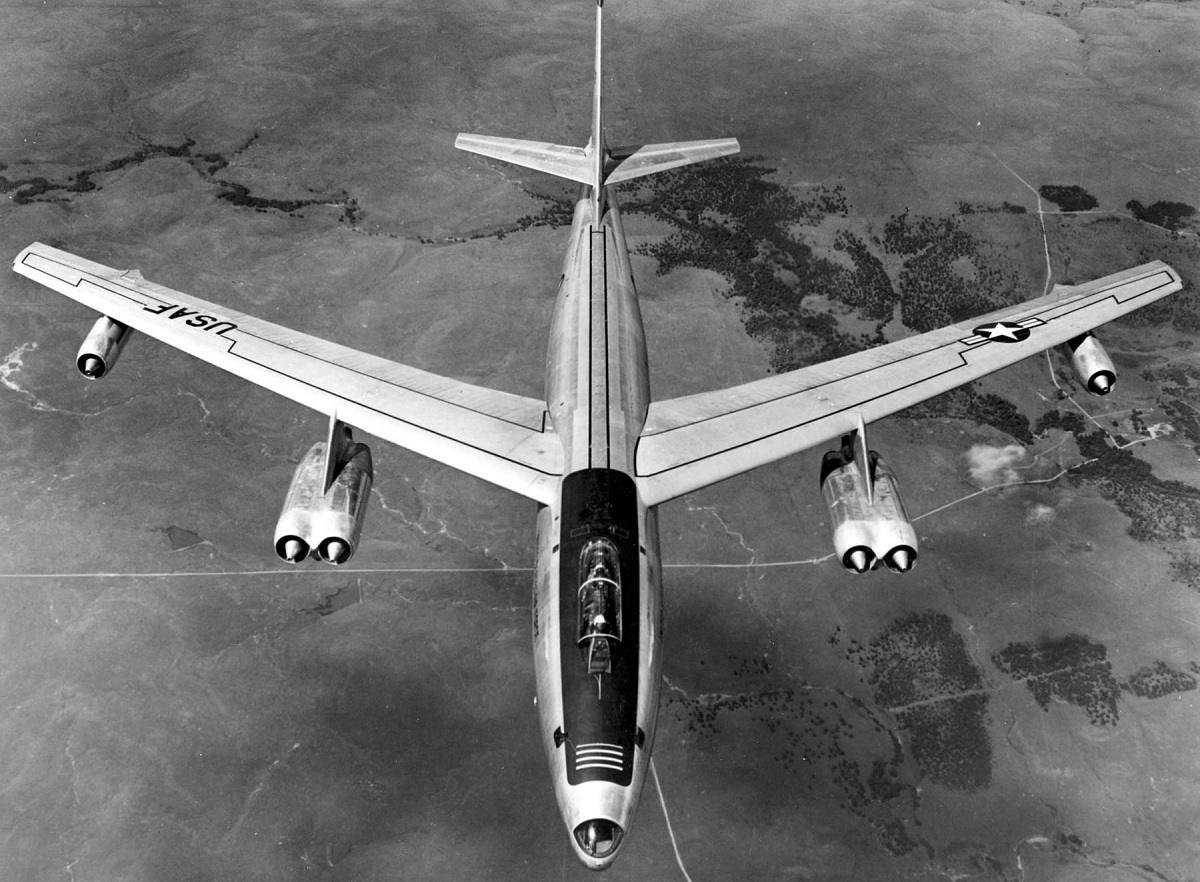
Reconnaissance in the Early Cold War
By 1954, photographic reconnaissance had become the backbone of American Cold War intelligence strategy. The newly formed Strategic Air Command (SAC) had begun long-range missions to photograph Soviet airfields, radar sites, and military installations—vital data that satellites would not provide for another five years. The RB-47, a reconnaissance variant of the B-47 Stratojet, was designed specifically for this work. Stripped of bombs and fitted with cameras and sensors, it could cruise at 40,000 feet (12,192 meters)—a ceiling that, until the MiG-17’s arrival, Soviet fighters could not reliably reach. Intelligence briefings had assured crews that the older MiG-15 topped out around 45,000 feet but lacked the speed to catch a bomber-reconnaissance aircraft at operational altitude. This confidence, however, rested on incomplete data. The MiG-17, with its refined design and afterburner, changed the equation overnight. Austin’s mission would prove it definitively—and nearly cost him his life and aircraft.
The Reconnaissance Mission: Murmansk, May 1954
The MiG-17’s entry into service also signaled the end of NATO jet reconnaissance aircraft’s immunity to Soviet air defenses. On May 8, 1954, an RB-47 of the 91st TRW, piloted by Capt. H.R. Austin, departed RAF Fairford on a mission to photograph nine Soviet airfields near Murmansk. After capturing images of the second airfield from 40,000 feet, the aircraft was intercepted near Arkhangelsk by three MiG-17s from the 1619th IAP.
As Austin tells in Michael Napier’s book In Cold War Skies, the encounter that followed would test both pilot and aircraft to their limits.
The Attack: Four Passes at 40,000 Feet
Austin recounted that they had been over Soviet territory for an hour and were at 40,000 feet. Intelligence had briefed the crew that the MiG-15 would not be able to cause any damage at that altitude, given their true airspeed of approximately 440 knots. The first Soviet aircraft to make a firing pass, however, proved to be a MiG-17, not a MiG-15. It approached from the left rear, with cannon tracer shells observed passing both above and below the aircraft, the MiG still moving at considerable speed as it passed beneath them.
The decision was made to push the RB-47 into a descent of a couple of thousand feet, gaining approximately 20 knots of indicated airspeed in the process. The second MiG-17 then made its firing pass, with tracers again observed going over and under the aircraft — an experience Austin described as genuinely frightening. The copilot had repositioned to operate the tail guns following the first attack, though the two remotely controlled 20mm cannons characteristically failed to fire.
When the third MiG began its pursuit pass, the guns discharged briefly for a matter of seconds. Although General LeMay had not equipped the guns with tracers, the Soviet pilot apparently observed something and broke off his pass. The subsequent flights — a group of six, and a further flight that joined later — maintained a position some 30 to 40 degrees to the side, outside the effective range of the guns. The Soviet pilots had no way of knowing that the guns would not fire again, despite the copilot’s repeated attempts to restore their function, including what Austin believed was physical force applied to the panel.
The fourth MiG of that flight scored a hit through the top of the left wing, approximately eight feet (2.4 meters) from the fuselage and through the wing flap. The round exploded into the fuselage in the area of the number one main tank and disabled the intercom. By that point, the final photo target had been covered and the aircraft had turned due west toward Finland.
The Damage Assessment: What the Aircraft Endured
The round that struck Austin’s left wing—eight feet (2.4 meters) from the fuselage, punching through the wing flap and exploding into the fuselage’s number one fuel tank—was a near-catastrophic hit. At 40,000 feet and already at the edge of the aircraft’s fuel envelope, this damage threatened the entire crew. The loss of intercom after the strike meant Austin could not communicate with his crew in the rear compartment, only adding to the crisis. The damage to the main tank meant an immediate re-calculation of fuel reserves. What appeared manageable at first—the aircraft seemed to hold altitude and airspeed—deteriorated as the damaged aircraft coasted out over Norwegian airspace. The aircraft had burned fuel at an unexpected rate, its aerodynamic profile altered by the gaping hole in its wing structure. A 43,000-foot (13,106-meter) climb and reduction to maximum-range cruise settings became essential. It was a gamble: climb higher for thinner air and better fuel efficiency, but risk hypoxia and systems failure at extreme altitude. The decision to attempt the return proved correct, but only barely. The KC-97 Stratofreighter tanker that met Austin over England found him in a dangerously low fuel state—the kind of approach profile that leaves no margin for missed rendezvous or weather delays.
The Final Gauntlet: More MiGs Over Norway
Shortly thereafter, three more MiGs appeared. Two made individual firing passes, though the aircraft’s increased speed made engagement more difficult for the attackers. One MiG then came alongside on the right, at close range, and held that position for two to three minutes. Two further MiGs attempted firing passes without scoring hits; by that stage the aircraft was well clear of Soviet territory.
Uncertainty remained as to how the damage to the left wing and fuselage would affect fuel consumption, which initially did not appear severe. As the aircraft coasted out past Norway, however, it became apparent that fuel reserves had fallen behind projections. A climb to 43,000 feet was made and speed was reduced to a maximum-range cruise setting. It was assessed that a base in England could be reached, and a strip alert tanker was known to be standing by at Brize Norton.
After taking on fuel from a KC-97 Stratofreighter while in a dangerously low fuel condition, the damaged RB-47 was able to return to Fairford.
Why This Mission Mattered
The May 8, 1954, attack on Austin’s RB-47 marked a turning point in Cold War air operations. It proved that Soviet aircraft had closed the technological gap faster than American intelligence had calculated, and that reconnaissance missions at “safe” altitudes were no longer safe. Within months, SAC reconnaissance flights began flying in coordinated formations with fighter escorts when possible, and mission planners revised altitude profiles to account for the MiG-17’s proven capability. Capt. Austin’s calm decision-making and his aircraft’s structural durability—a testament to the B-47’s robust design—prevented this mission from becoming a major Cold War incident. Had the RB-47 been shot down over Soviet territory, the diplomatic and intelligence consequences would have been severe. Instead, Austin’s survival and successful recovery set a precedent: American reconnaissance would continue, but with calculated risk and constant tactical adaptation. His story is one of the lesser-known episodes in the broader reconnaissance war that defined the early Cold War—a conflict fought not with bombers or fighters, but with cameras, courage, and aircraft pushed to their limits.
In Cold War Skies is published by Osprey Publishing and is available to order here.
Photo by U.S. Air Force

