

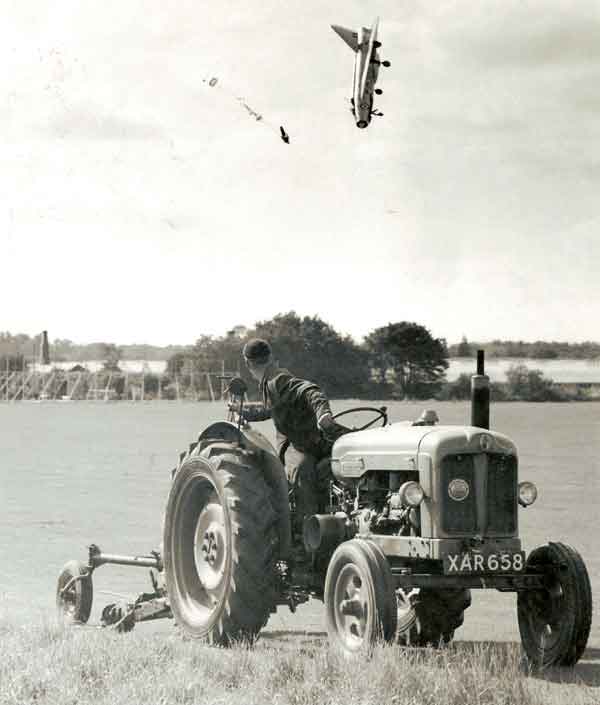
The tractor driver swiftly turned around to check what was happening after hearing the bang of the ejection seat
The following article titled “The story behind a famous photograph of an ejection from a Lightning” appeared in Issue 5 – English Electric Lightning of Aviation Classic.
Jim Meads took the main photo of this post on September 13, 1962. At the time, it was published in newspapers all over the world, and because it was so widely read, Martin-Baker, a manufacturer, was naturally interested in it.
At Hatfield, Hertfordshire, at the time, Jim lived next door to de Havilland test pilot Bob Sowray, and on this particular day, both of their wives had traveled to London to buy clothing. Jim’s kids inquired if they could go see Bob’s Lightning flight after Bob stated that he was scheduled to fly one that day. Although being a photographer, Jim rarely brought his camera on outings like this. On this specific occasion, he made the decision to take a photo of his neighbor flying. The camera he brought just had two exposures.
The spectators positioned themselves close to the threshold of de Havilland’s Hatfield airfield and waited for the Lightning to come back. When XG332 was about 200 feet in the air during the final approach, its nose pitched up, and the pilot ejected. An engine fire had compromised a tailplane actuator, rendering the Lightning uncontrolled.
Soon after the ejection, Jim took one picture, and as can be seen, it shows the pilot inverted with his parachute still closed and the Lightning plummeting toward the ground right next to him. The tractor driver, who was probably relieved he wasn’t working further over in the field, heard the bang of the ejection seat and swiftly turned around to see what was happening. The last image Jim had was of the jet’s collision and the subsequent plume of dense, black smoke.
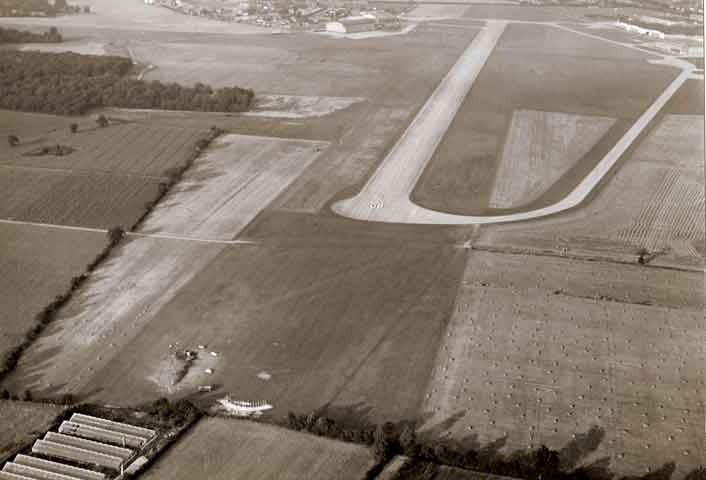
Thankfully, the pilot made it out alive after crashing into a tomato-filled greenhouse. He sustained various limb breaks and injuries as a result of the glass that fell on him as he fell through the greenhouse’s roof. However, Bob Sowray had elected to delegate the responsibility of the trip to fellow test pilot George Aird rather than himself.
On May 29, 1959, XG332, one of 20 pre-production Lightnings, had its first flight. It was employed by BAC and de Havilland for the Firestreak and Red Top trials throughout its flying career, and its crash happened during the latter program.
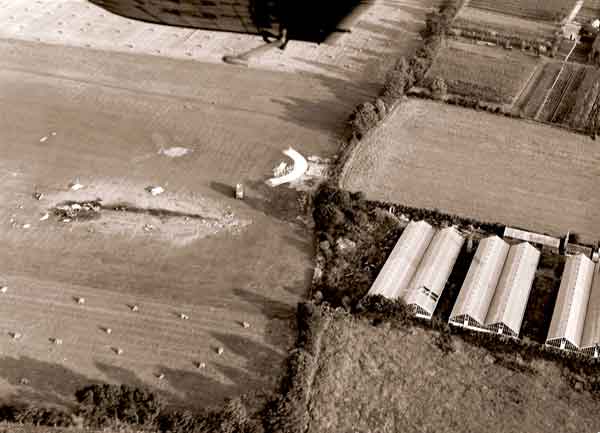
Photo by Jim Meads via www.rafjever.org

