

There is no doubt the Super Tomcat 21 would have been the better plane, but it still would have likely been a bit more expensive and still required some more maintenance than the Super Hornet
During the Cold War, developments in Soviet long-range patrol and bomber aircraft created a necessity for a fleet defense fighter capable of engaging high-altitude bombers from a considerable distance. Grumman responded with the legendary F-14 Tomcat. Armed with long-range AIM-54 Phoenix air-to-air missiles, F-14s could target multiple adversaries from over 90 miles away. In order to achieve the speed of an interceptor while carrying heavy weaponry, Grumman designed the highly effective variable-sweep wing for the F-14, allowing it to function across a broad range of airspeeds.
The F-14 engaged in its inaugural combat mission in August 1981, shooting down two Libyan Su-22 fighters over the Gulf of Sidra. It served extensively during the Gulf War, as well as in Iraq and Afghanistan. The final F-14D Super Tomcat was retired from active duty in 2006, having been succeeded by the F/A-18E/F Super Hornet, which represents an evolutionary enhancement of the F/A-18C/D.
Would the Super Tomcat outperform the Super Hornet, given that both have the same weapons technology?
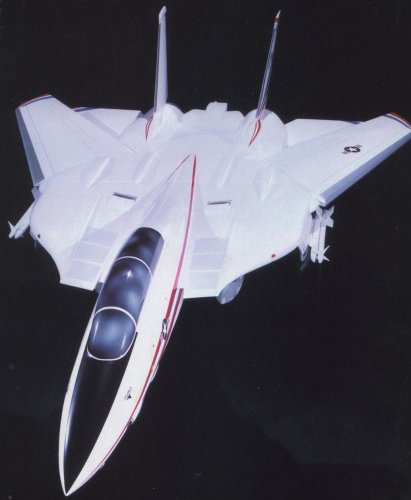
‘The F-14D Yes, it would in every area except reliability and turn performance (with equivalent combat loads the Tomcat was actually better than the F/A-18), but to truly understand what could have been you need to look at the Super Tomcat 21,’ explains Kevin Mason, former US Naval Test Pilot School and TOPGUN Graduate, on Quora.
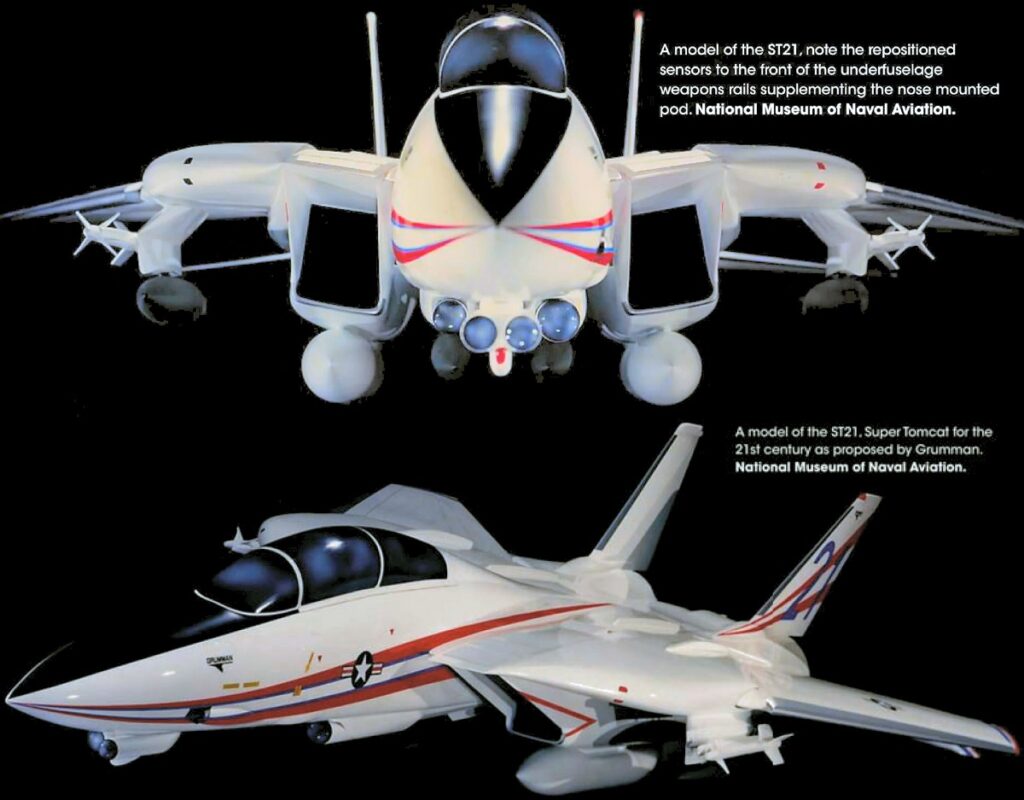
‘This is a fairer comparison because the Tomcat’s contemporary was the F/A-18C, while the F/A-18E/F is virtually a whole new aircraft in an F-18 skin. So, assuming the Tomcat would have had the same money thrown at it as the Hornet, the actual aircraft to compare is the Super Tomcat 21.
‘The Super Tomcat 21, just like the Super Hornet, would have been a virtually complete redesign of the original with modern technology replacing the old and troublesome 1960s tech. Included in that would have been fly-by-wire and reduced static stability (i.e., it would have turned even better than it already did), plus it would have had the F110–429 engines with even more thrust than the F-14D. Based on tests by Grumman, the Super Tomcat 21 would have been capable of super cruise with a full air-to-air load out.’
Mason continues;
‘So, the Super Tomcat 21 would have been faster, accelerated faster, carried more, had longer range and longer loiter, more bring back of unexpended ordnance, and been more maneuverable (especially with a combat load.) As for avionics and weapons, it would have had everything the Super Hornet has and can carry, but because of the F-14’s larger size, it would have had a more powerful radar.
‘As for the AIM-54, it’s hard to say if it would have been continued and for how long. Undoubtedly, the Super Tomcat 21 would have retained the AIM-54C capability, and there had been several proposed and early developments of a follow-on advanced Phoenix, so it’s possible it would have continued, but because of the end of the Cold War and the F-14 getting AMRAAM it’s unlikely.
‘Although the Super Tomcat 21 would have been considerably more reliable and easier to maintain than the F-14A/B/D it probably would have still required more maintenance man hours than the Super Hornet because it would still have the variable sweep wings (a system that the Super Hornet doesn’t have) but since the wing system would have been upgraded as well it’s hard to say what the man hour cost would have actually been. Undoubtedly it would have been much better than its predecessors. Everything else would have been at least on par with the Hornet.’
Mason concludes;
‘There are other things that were planned (some classified) and there is no doubt the Super Tomcat 21 would have been the better plane but it still would have likely been a bit more expensive and still require some more maintenance than the Super Hornet.’
Photo by: Northrop Grumman, National Museum of Naval Aviation and Boeing


